From Toy to Tool: building the framework for success
Turning AI into a real tool requires more than clever prompts—it needs a smart foundation. Picture a digital workshop where every job—creating a proposal, processing an invoice, answering a customer query—follows clear steps stored in one place. A low‑code process–data–document engine serves as this workshop. It lets teams design workflows like building with blocks: drag and drop tasks, link them to relevant data and documents, and share them across departments without writing code. Organizational knowledge—templates, policies, best practices—is baked in, ensuring everyone follows the same playbook.

When a generative‑AI assistant is integrated into this engine, it stops being a toy and becomes a skilled helper. Instead of drafting random text, the AI operates within structured workflows: it reads incoming documents, matches them to existing records, and suggests next steps based on previous cases. It retains context and learns from feedback, closing the learning gap that cripples typical pilots1. Research shows that externally partnered solutions, which often provide such structured platforms, are roughly twice as likely to succeed as in‑house builds2. These solutions allow deep customization and empower line managers—the people closest to the work—to drive adoption3.
Focusing on back‑office processes may not be glamorous, but it pays off. By combining AI-driven problem-solving with intelligent planning and prioritization, organizations can move faster, focus smarter, and make better decisions every day4. With a collaborative engine and a memory‑capable AI, mundane tasks like data entry, routing approvals, and compiling reports become nearly automatic. Employees gain time to solve real problems instead of shuffling paperwork.
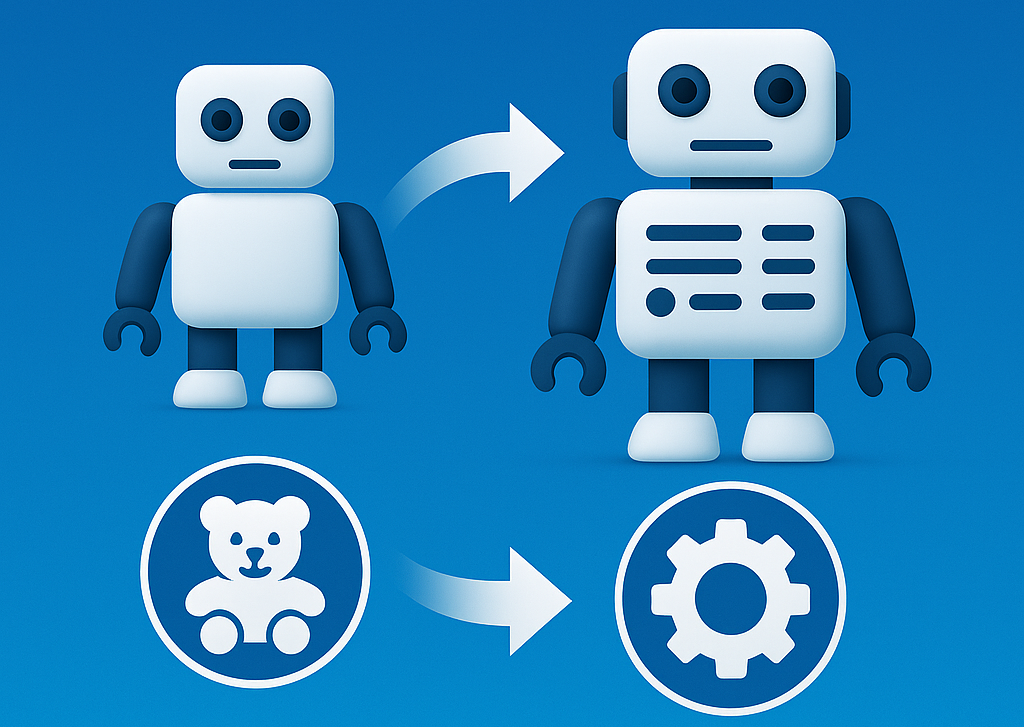
The shift from toy to tool is therefore about structure: when AI is housed in a clear, collaborative system grounded in the organization’s knowledge, it moves beyond experimentation into everyday productivity.
- Adnan Masood’s analysis highlights that systems which persist memory and learn from feedback—so‑called agentic approaches—are essential to closing the learning gap in today’s AI deployments medium.com. ↩
- MIT researchers found that externally partnered AI solutions succeed roughly twice as often as internal builds fortune.com. ↩
- Successful deployments demand deep process customization and empower line managers and frontline prosumers to lead adoption with clear accountability medium.com. ↩
- The NANDA report details how organizations achieve multi‑million‑dollar annual savings through back‑office automation, such as document processing and customer operations medium.com. ↩