Breaking the bottleneck: why AI pilots stall
In many offices, daily work resembles trying to bake a cake without a recipe. Everyone has ingredients—data, documents, tasks—but no shared instructions. Teams drown in email threads, spreadsheets, and disconnected software, leaving them exhausted. When generative AI arrived, companies imagined a miracle cure; chatbots could answer questions, draft messages, or summarize reports. Yet about 95 % of generative‑AI pilots stall, delivering little financial impact1. The problem isn’t the intelligence of the models; it’s the lack of structure around them.

Generic chatbots work well for individuals but rarely scale to enterprise‑level transformation. They forget context, can’t learn from feedback, and don’t capture the nuances of each department’s tasks. Employees quickly abandon them for sensitive work or resort to unsanctioned tools—the “shadow AI economy”2. Meanwhile, companies spend heavily on flashy front‑office experiments, such as marketing bots, while ignoring the back‑office processes where automation yields the highest returns3. This misalignment compounds frustration: budgets evaporate on pilots that never go into production, while manual data entry and approvals continue to slow down work.
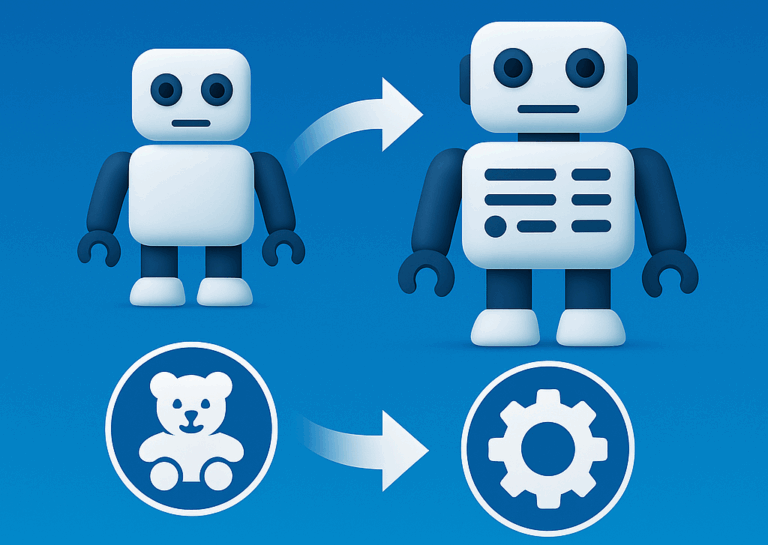
Yet beneath the disappointment lies potential. Imagine a workplace where AI is embedded in the very fabric of processes—automating routine tasks, remembering past decisions, and helping teams collaborate. Instead of an isolated toy, the AI becomes a cooperative partner, promising a transformative leap. The next post outlines how to make that leap from novelty to necessity.
Curious how to transform AI from a clever toy into a reliable tool? In our next post, we unveil a practical blueprint that combines a simple, low‑code engine with collaborative AI to streamline workflows and magnify your team’s impact.
- A study published by Fortune reports that only about 5 % of AI pilot programs achieve rapid revenue acceleration, while 95 % stall in their early stages fortune.com medium.com. ↩
- The MIT NANDA research explains that most tools don’t remember or adapt to enterprise workflows, leading employees to abandon them and use unsanctioned “shadow AI” tools medium.com. ↩
- The same Fortune report notes that more than half of generative‑AI budgets are spent on sales and marketing tools, even though the greatest returns come from back‑office automation fortune.com. ↩